
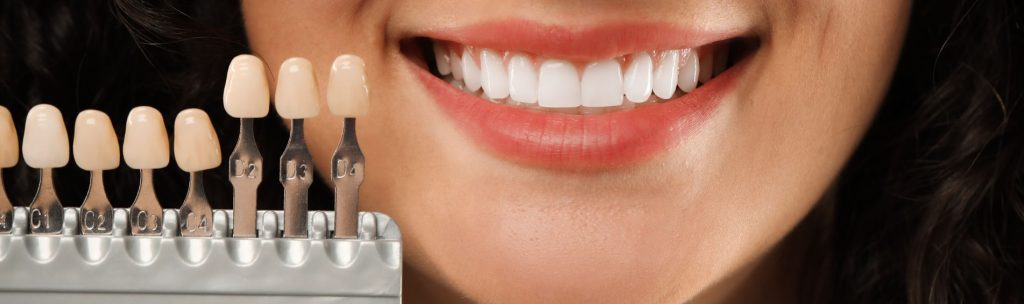
Choose the shade of your veneers is arguably the most anxiety-inducing decision for anyone considering this treatment. It makes perfect sense: nobody wants to invest in a new smile only for the first question they get to be, “Have you had work done?”. The result almost everyone is looking for is quite the opposite — for no one to notice anything specific, yet for everyone to see something different about you.
Curiously, the most frequent mistake doesn’t happen in the dental chair. It happens earlier, in the patient’s mind. In this article, we are going to explain exactly what that mistake consists of and what you should bear in mind so that your veneers are perfectly integrated with your face, your skin tone, and your personality.
Exactly what veneers are and why the shade matters so much.
The most common mistake: confusing "white" with "natural"
This is where the mistake we mentioned earlier comes in. Many patients arrive at the clinic with a mental image of stark white, almost luminous teeth they’ve seen on social media. The problem is that this kind of extreme white is, in most cases, simply not believable because it bears no relation to your skin tone, your eyes, or the surrounding tissues of the mouth.
Natural teeth are not perfectly white. They possess translucency, subtle shade variations between the biting edge and the gum line, and a visual relationship with the gums and lips. A veneer that abruptly breaks that harmony creates a contrast that the brain interprets as artificial, even if the clinical execution is technically flawless.
The shade scale: how it works in practice
In cosmetic dentistry, standardised shade guides are used to select the tone for restorations. The most common is the Vita Classical guide, which organises colours into four families (A, B, C, and D) with varying levels of saturation. Group A tones are the warmest; Group B are more yellow; Group C tend towards grey; and Group D are more reddish-grey.
For dental veneers, dentists also frequently turn to the Vita Bleached guide, designed specifically for lighter tones. This scale ranges from BL1 to BL4, where BL1 is the whitest and BL4 is the darkest within the bleached range.
So, which shade should you choose?
There is no universal answer, but there are several criteria that professionals use as a reference:
- The whites of your eyes: The ocular sclera is one of the best natural reference points. A veneer shade that matches this white usually looks believable to the human eye.
- Skin tone: Darker skin tones can carry off very white shades without them looking jarring. Fairer or rosier complexions often look better with warmer or slightly ivory shades.
- Age: Over the years, natural teeth gradually darken. Choosing an intense white past a certain age can create an excessive contrast with the rest of the face.
- The use of makeup: For those who regularly wear dark lipstick, the contrast with whiter shades works better than for those who prefer a natural look.
The role of technology in shade selection
In clinics equipped with state-of-the-art technology, choosing a shade goes far beyond simply comparing physical samples. We utilise calibrated photography and digital simulations that allow you to visualise the approximate result before the veneers are manufactured. This significantly reduces uncertainty, allowing the patient to make a more informed decision with no unwanted surprises.
At Quality Dent, we have the necessary technology to plan every treatment in detail, including the crucial shade selection phase, ensuring the final result is perfectly consistent with each patient’s overall appearance.
What nobody tells you about veneers that look "too perfect"
A smile that looks “picture-perfect” can often be less attractive in real life than one that simply looks healthy and natural. Subtle, controlled imperfections—such as slight shade variations or a hint of translucency—are what give veneers that organic appearance, making them indistinguishable from natural teeth.
The ultimate goal of high-quality veneers shouldn’t be to stand out, but to blend in. Ideally, no one should know they are there, yet the difference should be felt in the confidence you project every time you smile.
The key lies in bespoke planning
There is no universally perfect veneer shade for everyone. The right choice depends on a joint assessment between the patient and the dentist, taking into account facial features, skin tone, age, and the desired visual effect. What is universal, however, is that the veneers with the best long-term results are always the ones that are noticed the least… because they integrate seamlessly with the person wearing them.
If you are considering enhancing your smile with porcelain veneers, at Quality Dent we help you find the shade that best suits you, with a team specialising in cosmetic dentistry and a completely bespoke approach.