
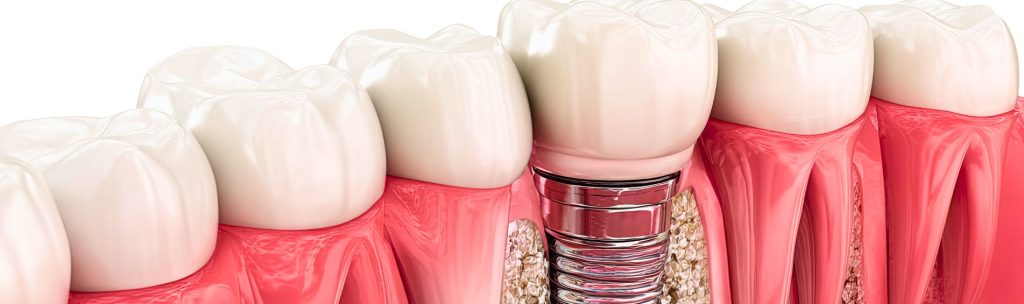
Getting dental implants with low bone volume is, nowadays, a reality for many patients who previously believed this option was not possible for them. If you’ve ever been told that you don’t have enough bone density in your upper jaw to place implants, don’t give up just yet. A sinus lift is the technique that changes the rules of the game, and at Quality Dent we explain exactly what it involves and why it could be the solution you’re looking for.
Why might there be insufficient bone for implants?
When a tooth is lost—whether due to decay, periodontitis or trauma—the bone that supported it begins to resorb progressively. In the area of the upper molars and premolars, this presents an additional challenge: just above this region lies the maxillary sinus, an air-filled cavity which, as it expands downward over time, further reduces the available bone height.
The result is that, in many cases, there isn’t enough bone height to anchor an implant with the required stability. This is where a sinus lift procedure comes into play.
¿Qué es la elevación de seno y cómo funciona?
A sinus lift, also known as sinus augmentation, is a surgical procedure that involves gently lifting the membrane of the maxillary sinus to create space, which is then filled with bone graft material. Over time, this material integrates with the patient’s natural bone, forming a solid foundation for proper implant osseointegration.
There are two main approaches:
- Open technique (lateral window): Used when bone deficiency is significant, typically when less than 4–5 mm of bone is available. The surgeon accesses the sinus through a small window in the gum and places the graft. In many cases, implants are placed at a later stage once the graft has matured.
- Closed technique (through the implant site): Indicated when there is between 5 and 8 mm of bone. In this case, the lift is performed through the same site where the implant will be placed, making it less invasive. Implants can usually be placed during the same surgical procedure.
Does it hurt? How long is the recovery?
This is one of the most common questions. The procedure is performed under local anaesthesia and, in general, post-operative discomfort is manageable with standard medication. Some swelling during the first few days is normal.
The healing period for the graft to mature and for the implants to fully integrate can range from 4 to 9 months, depending on the case—but the results are well worth the wait.
Are you a candidate for this procedure?
The only way to know for certain is through a clinical examination and a 3D scan that allows precise measurement of the available bone and the position of the sinus. At Quality Dent, we use state-of-the-art digital radiodiagnostic technology to plan each case in detail.
If you’re considering restoring your smile and want to know whether implants are an option for you, explore our dental implants in Sabinillas and book an initial consultation with our specialised team.
What about financing?
We understand that cost is a genuine concern. That’s why at Quality Dent we help you arrange financing for your treatment, ensuring that money is not a barrier to your oral health. We guide you through the process and make it easier for you to access the best possible conditions.
Take the first step today. Book your appointment and find out whether a sinus lift is the solution to restore your smile.