
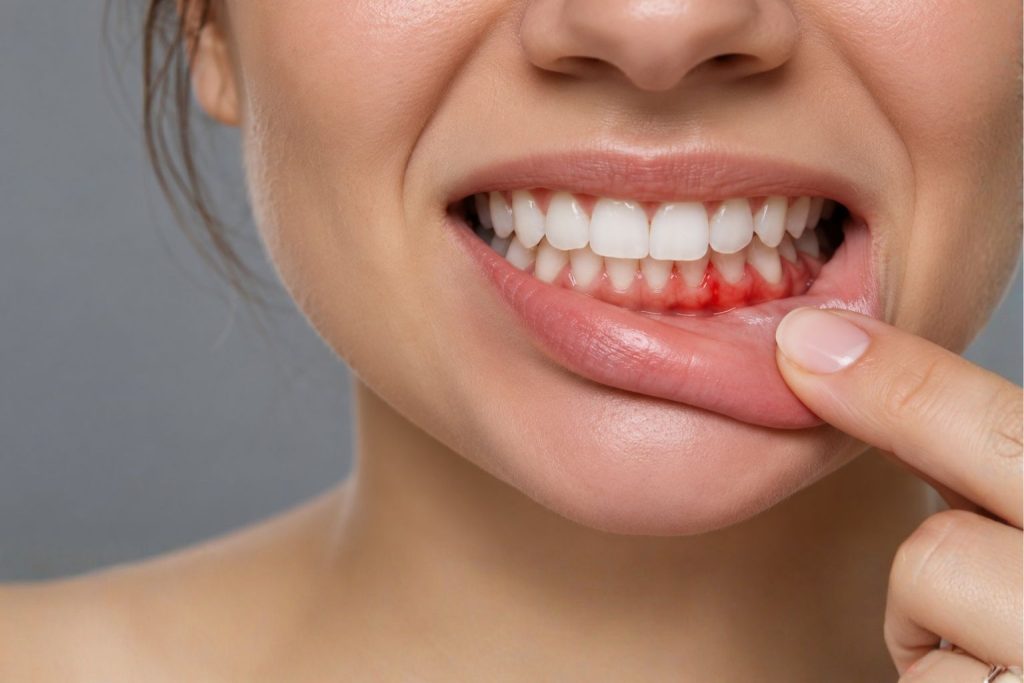
Seeing a little blood in the sink when brushing your teeth can be worrying, and understandably so. Understanding why your gums bleed is the first step in knowing whether it is a one-off issue or a sign that should be checked. In most cases, bleeding gums are caused by inflammation resulting from bacterial plaque. It is a common problem and, when detected early, it can be treated.
Even so, healthy gums should not bleed during normal brushing. That is why it is worth understanding the most common causes, what you can do at home and when it is best to have your gums checked by a dentist.
Is it normal for gums to bleed?
Occasional bleeding, for example after brushing too vigorously or irritating the gum with a hard piece of food, does not necessarily indicate a problem. What is not considered normal is for your gums to bleed frequently, every time you brush or floss, or even for no apparent reason.
Bleeding is a sign that the gum tissue is irritated or inflamed. Identifying the cause of this inflammation is what allows the problem to be treated appropriately.
Dental plaque and gingivitis: the most common cause
Dental plaque is a sticky film that continuously forms on the teeth, particularly where the teeth meet the gums. If it is not removed properly through brushing and cleaning between the teeth, the bacteria it contains can irritate the gums and trigger an inflammatory response.
This inflammation is known as gingivitis. Inflamed gums often look redder and swollen, may feel sensitive and can bleed easily when brushed. Gingivitis is often painless, which is why it can go unnoticed for some time.
Plaque that is not removed eventually hardens and becomes tartar. Tartar cannot be removed with a toothbrush and makes it easier for more plaque to accumulate, allowing the inflammation to continue.
The good news is that gingivitis is reversible. Once plaque and tartar are removed and oral hygiene is improved, the gums can usually return to a healthy condition.
Bleeding gums when brushing or flossing
Bleeding gums while brushing is the most common way people notice the problem. Sometimes the cause lies in the brushing technique itself: a toothbrush with hard bristles or applying too much pressure can damage the gums.
It is also common for the gums to bleed during the first few days after starting to use dental floss or interdental brushes. If the bleeding is caused by plaque-related inflammation, it will usually decrease as the area is cleaned regularly.
A very common mistake is to stop brushing an area that bleeds for fear of causing further damage. In fact, the opposite happens: plaque continues to build up and the inflammation becomes worse. The right approach is to continue cleaning the area gently and with the correct technique. If you are unsure, take a look at our guide on how to use dental floss correctly.
If your gums bleed frequently, a dental check-up can help identify the cause before the problem progresses.
Other factors that can contribute to bleeding gums
In addition to plaque, there are several circumstances that can make the gums more prone to inflammation or bleeding:
- Hormonal changes, such as those that occur during pregnancy or puberty, which can increase the gums’ response to plaque.
- Certain medicines, particularly anticoagulants and antiplatelet medicines, which can make bleeding more likely. Never stop taking them without medical advice: discuss this with both your doctor and your dentist.
- Smoking, which is an important risk factor for periodontal disease. It can also reduce bleeding and mask the problem, so in smokers, the absence of bleeding does not necessarily mean that the gums are healthy.
- Poorly controlled diabetes, which is associated with an increased risk of gum problems.
- Poorly fitting fillings or dental prostheses and orthodontic appliances, which can make cleaning more difficult and encourage plaque to build up.
Less commonly, bleeding may be related to significant nutritional deficiencies or blood and clotting disorders. If your gums bleed spontaneously and you also notice unexplained bruising, frequent nosebleeds or unusual tiredness, you should also speak to your doctor.
When bleeding gums may indicate periodontal disease
If gingivitis is left untreated, in some people the inflammation can progress to the tissues that support the teeth, including the surrounding bone and ligament. This is known as periodontitis.
With periodontitis, pockets form between the gums and teeth where bacteria and tartar accumulate, gradually causing the teeth to lose support. Unlike gingivitis, lost bone does not regenerate on its own, although treatment can help control and stabilise the condition.
Bleeding gums do not necessarily mean that you have periodontitis. However, bleeding can be one of its signs, and the only way to determine the condition of your gums accurately is through a professional examination.
Warning signs that mean you should see a dentist
We recommend booking an appointment if you notice any of the following:
- The bleeding occurs frequently or does not improve after one or two weeks of careful oral hygiene.
- Your gums bleed spontaneously without brushing.
- Your gums are red, swollen or painful.
- You experience persistent bad breath or an unpleasant taste in your mouth.
- Your gums appear to be receding and your teeth look longer.
- A tooth feels loose, has changed position or new gaps have appeared.
- There is pus between the gum and tooth or you experience discomfort when chewing.
What you can do to look after your gums
Good daily oral hygiene is the foundation for preventing and reducing gum bleeding. Brush your teeth at least twice a day for around two minutes using a soft toothbrush, paying particular attention to the gum line. You should also clean between your teeth every day using dental floss or interdental brushes, depending on what your dentist recommends.
If you smoke, giving up can directly benefit the health of your gums. Regular dental check-ups are also important, as they allow gingivitis to be identified before it progresses. Mouthwashes can be a useful addition to your routine, but they do not replace brushing or professional cleaning, and ideally they should be used following your dentist’s advice.
You can find more information in our tips for keeping your gums healthy.
How your dentist can help
During your appointment, the dentist will examine the condition of your gums and measure the depth of the space between the gum and the tooth — known as periodontal probing — and, if necessary, take X-rays to assess the bone. This information helps determine the cause of the bleeding and whether gingivitis or periodontitis is present.
Treatment depends on each individual case. For gingivitis, a professional cleaning to remove plaque and tartar, together with some adjustments to your oral hygiene routine, is often sufficient.
When periodontitis is present, scaling and root planing may be carried out to clean the surface of the tooth roots below the gum line. In certain advanced cases, other periodontal treatments may be required.
Afterwards, regular maintenance appointments are essential for keeping the condition under control. If you would like to find out more, visit our page on periodontal treatment and gum care.
Frequently asked questions
Why do my gums bleed when I brush my teeth?
The most common cause is inflammation resulting from the build-up of bacterial plaque around the teeth and along the gum line. Brushing too aggressively or using a toothbrush with hard bristles can also contribute to bleeding.
Should I stop brushing if my gums bleed?
No. Avoiding the area allows more plaque to accumulate and can make the inflammation worse. You should continue to clean your teeth gently and carefully and see a dentist if the bleeding persists.
Do bleeding gums mean I have periodontitis?
Not necessarily. Bleeding commonly occurs with gingivitis, but it can also be present in periodontitis. A periodontal examination is needed to determine the actual condition of your gums.
When should I see a dentist about bleeding gums?
It is advisable to arrange a check-up if the bleeding is frequent, occurs spontaneously, does not improve despite good oral hygiene, or is accompanied by swollen or receding gums, loose teeth, pus, persistent bad breath or other changes.
Look after your gums before the inflammation progresses
Understanding why your gums bleed can help you take the problem seriously without becoming unnecessarily worried. In many cases, the cause is gingivitis, which can improve once plaque and tartar are properly removed and good oral hygiene is maintained. When bleeding is frequent, persistent or accompanied by other symptoms, it is advisable to have it assessed by a dental professional.
If your gums bleed frequently, at Quality Dent in San Luis de Sabinillas (Manilva), we can assess the condition of your gums, identify the cause and explain the most appropriate treatment options for your individual case.
Do you regularly notice bleeding or inflammation in your gums? We can assess what may be causing it and help you look after your periodontal health.